
When Men Are Overlooked: What Jeremy Bailey's Story Teaches Us About Male Breast Cancer
Written by: Aryana HadjimohammadiJeremy Bailey was 34 years old, a single father of four in Topeka, Kansas, when he felt a lump on his chest during a shower one February morning in 2019. He had enough medical training from EMT school to trust what it was telling him. The lump was firm, fixed, and completely immovable — nothing like the soft, shifting tissue most people have somewhere on their body. He had been exhausted for weeks. He had lost his appetite. He knew something was wrong.
"In the back of my mind, I'm sick. I think this is breast cancer," Bailey said. "I know it's breast cancer. Now I have to get a game plan in action."
Getting anyone to listen would turn out to be far harder than the disease itself.
A Pattern Doctors Must Recognize
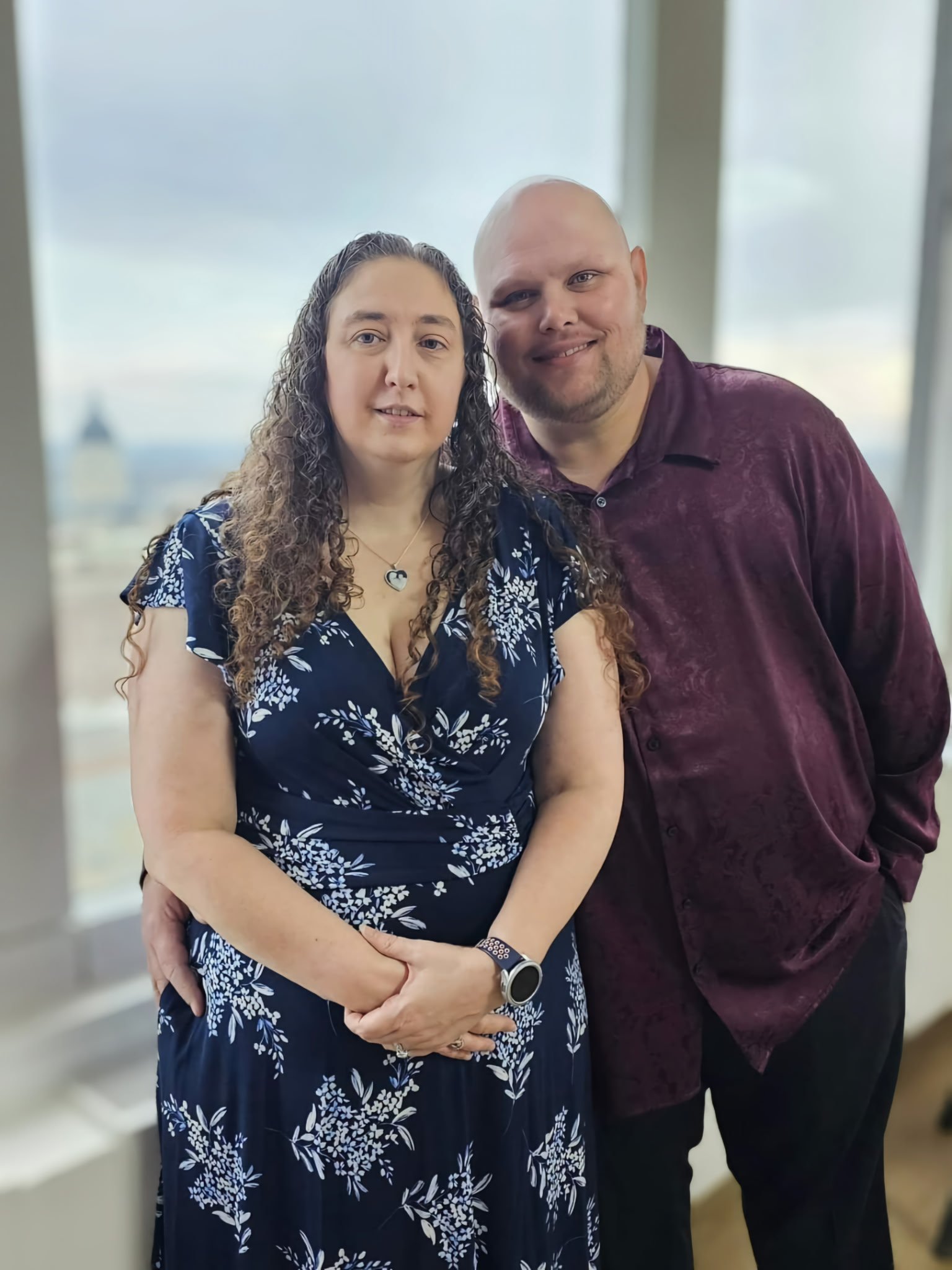
When Bailey sat down with his primary care physician days later, the response was immediate: "No. You're 34. You're too young to have cancer. But what kind of cancer do you think you have?" The doctor felt the lump and dismissed it. A radiologist, after a same-day mammogram Bailey had pushed hard to get, called it a benign calcium deposit and reminded him it was very rare for a man to get breast cancer.
Dr. Deepa Halaharvi, a breast cancer surgeon at Ohio Health in Columbus, Ohio, and a breast cancer survivor herself, adds in her professional advice on the topic of male breast cancer. She says this response is not an outlier — it is a pattern with a name. "Providers may also succumb to 'anchoring bias,' where the rarity of the disease makes it the last thing they look for," Halaharvi says. The result is a diagnostic gap that research has quantified: according to Halaharvi, studies show the average delay from symptom onset to diagnosis in men is 6 to 21 months.
That delay is not just a number. In men, it carries specific anatomical consequences. "The cancer has more time to spread to the lymph nodes or distant organs," Halaharvi says. "Because men have less breast tissue, the 'runway' between a local tumor and the chest wall or lymph nodes is very short."
For Bailey, the delays began accumulating from the moment he sat down in his doctor's office. He describes the experience of being dismissed at every turn as profoundly disorienting. "Just trying to get someone to listen to you and feel like I'm not getting anywhere with it, and everyone wants to ignore my symptoms and stuff," he says. "I thought to myself, like, okay. Maybe I am going crazy a little bit."
He was not. After pushing his doctor to write a stat mammogram order, an urgent high-priority breast imaging order, — "Well, now I'm going to play doctor. You're going to write the orders" — and then demanding a surgical biopsy when the mammogram results failed to satisfy him, Bailey received his confirmation two weeks later. "I felt it was just a relief that I was right the whole time," he says.
Who Gets Male Breast Cancer — and Why Most Cases Are Sporadic
Bailey has no family history of breast cancer and tested negative for BRCA mutations and all other hereditary markers. For many people, that information is reassuring. “It shouldn't be”, Halaharvi says — and Bailey's case demonstrates exactly why.
"About 10% to 20% of male breast cancers are hereditary," says Halaharvi. "The vast majority — 80% to 90% — are sporadic, meaning breast cancer can occur due to age, environment, or lifestyle factors without a clear genetic blueprint." Negative genetic testing, she notes, "only means he didn't inherit a specific, well-known 'glitch'; it doesn't mean he is immune."
According to the American Cancer Society, approximately 2,670 men in the United States will be diagnosed with breast cancer in 2026, and an estimated 530 will die from it. While that represents less than 1% of all breast cancer cases, Halaharvi emphasizes that the biology of the disease is essentially the same in men as in women — which is why the outcomes gap is so striking and so preventable.
"Historically, men had worse outcomes, but only because they were diagnosed later," says Halaharvi. "When you compare a man and a woman at the same age and same stage of cancer, their survival rates are virtually identical. The 'male disadvantage' is a delay in diagnosis, not a difference in the cancer's power."
Three Diagnoses, and the Cost of Imperfect Care
Bailey's first diagnosis was reclassified from stage 1 to stage 2A after he later sought care at the University of Kansas Cancer Center in Kansas City. He went into remission and began tamoxifen. In June 2022, a routine oncology visit revealed cancer in his right armpit lymph node — his second diagnosis. His reaction was raw: "Like, for real? Yeah. Like, was this really happening again?"
What followed was his most grueling stretch. His Topeka surgeon operated to remove the cancerous lymph node. Three days later, she called him crying — she had removed the healthy lymph nodes instead. Bailey was referred to specialists in Kansas City, who reclassified the case as a new primary cancer: stage 3A, grade 3. The original mastectomy had left breast tissue behind.
His second-round treatment included another double mastectomy, four rounds of AC chemotherapy — the regimen known as the "Red Devil" because, as Bailey puts it, "it's red, and it makes you really sick. Like, it will put you down on the ground" — twelve weeks of Taxol, 37 rounds of proton radiation, and three years of monthly Lupron injections. "So I was on these hormone blockers," Bailey says. "Makes you feel like you're in menopause. You know, you get the hot flashes. You get the mood swings. You get everything a female goes through."
In the fall of 2025, red spots appeared near his right armpit and severe pain developed under his right rib cage. Scans confirmed stage four metastatic breast cancer, now in his liver and lungs. Bailey is currently receiving Trodelvy, an IV chemotherapy, at the University of Kansas Cancer Center. The cancer in his lungs has cleared; his liver is still being monitored. He is not in remission. "When one medicine quits working, we go to another one until it stops working," he says. "This one here could work for years, and I could be on this one for years."
Halaharvi's data frames what the early delays cost. If caught at a localized stage, she notes, the five-year survival rate for male breast cancer is over 95%.
What the Awareness Gap Gets Wrong
Bailey has watched state legislation push for free mammograms for women with no equivalent for men. He has navigated breast cancer websites, awareness campaigns, and clinical waiting rooms — and found himself invisible in almost all of them. "They need to treat breast cancer provision just like they do females, along with the males as well," he said. "Well, what about guys? How come guys can't get free mammograms?"
Halaharvi gives clinical context to that frustration. The misconceptions that keep men from seeking care are well-documented: that men don't have breast tissue (they do), that breast cancer only affects older men (the average age is 67, but it can occur in the 20s and 30s), and that a painless lump isn't dangerous. "One of the most dangerous myths out there is— If it doesn't hurt, it's not cancer" Halaharvi says.
She also names the cultural forces that keep men silent beyond the medical system's blind spots. Male breast cancer, she says, can cause "a 'double trauma': the fear of cancer plus a crisis of masculinity. Men often feel out of place in pink-themed waiting rooms or support groups where the language is geared toward 'sisters' and 'survivors.'" On the research side, the gap is structural: because the patient pool is small, most clinical trials are conducted on women, and the results are extrapolated to men.
For Men Who Find a Lump — and the Doctors Who See Them
Both Bailey and Halaharvi arrive at the same bottom line, from opposite sides of the exam table.
Bailey says "You’ve got to advocate for yourself. If you don't want to advocate for yourself, you might as well just hang up your coat. Because if you're not going to sit there and stick up for yourself, no one else is going to do it for you."
Halaharvi gives advice for any man who finds something and considers waiting it out: "Don't wait. It is probably nothing, but 'probably' isn't good enough. Go to your doctor, use the word 'mammogram,' and get the answer. Your masculinity isn't defined by your chest — but your future might be defined by your actions today."
Breast health matters for everybody and every BODY—including men. While male breast cancer is often overlooked, tools like the Know Your Lemons App make it easier for anyone to learn what’s normal for their body and when to take action. Men can use the app’s guided chest self-exam, narrated by “Napoleon Boneparte”, to feel more confident checking their chest and understanding potential symptoms. Taking a few minutes to learn about your breast health today can make a meaningful difference tomorrow. And to learn more about male breast cancer, visit our partners at the Male Breast Cancer Global Alliance. 💛🍋
Sources
American Cancer Society — Breast Cancer in Men: 2026 U.S. incidence and mortality estimates; lifetime risk data
University of Kansas Cancer Center: Site of Jeremy Bailey's current and ongoing treatment
Male Breast Cancer Global Alliance: Advocacy and patient support resources for men with breast cancer
HIS Breast Cancer Awareness: Education and community resources for male patients
National Cancer Institute — Male Breast Cancer Treatment: Clinical treatment information
FORCE: Facing Our Risk of Cancer Empowered: Hereditary cancer resources, genetic testing guidance, and male breast cancer research
Statistics on diagnostic delay, ER+ rates, hereditary vs. sporadic incidence, and survival rates provided directly by Dr. Deepa Halaharvi, breast cancer surgeon and survivor, in interview